Introduction
AI Search is transforming the way people find information online. Instead of clicking through multiple websites, users are increasingly relying on AI-powered platforms like ChatGPT, Google AI Mode, AI Overviews, Google Gemini, Microsoft Copilot, and Perplexity AI to get instant answers.
For website owners, this creates an exciting opportunity—but also a new challenge.
Many businesses are publishing high-quality content, yet they still wonder why their websites rarely appear in AI-generated answers. They may rank well on Google Search but receive little or no visibility in AI-powered search experiences.
The reason is simple: answer engines don’t work exactly like traditional search engines.
While traditional SEO remains important, AI systems evaluate websites using additional signals such as topical authority, schema markup, entity recognition, content quality, trustworthiness, and semantic relevance.
If your website is missing these signals, AI may choose other sources even if your pages rank reasonably well in Google’s standard search results.
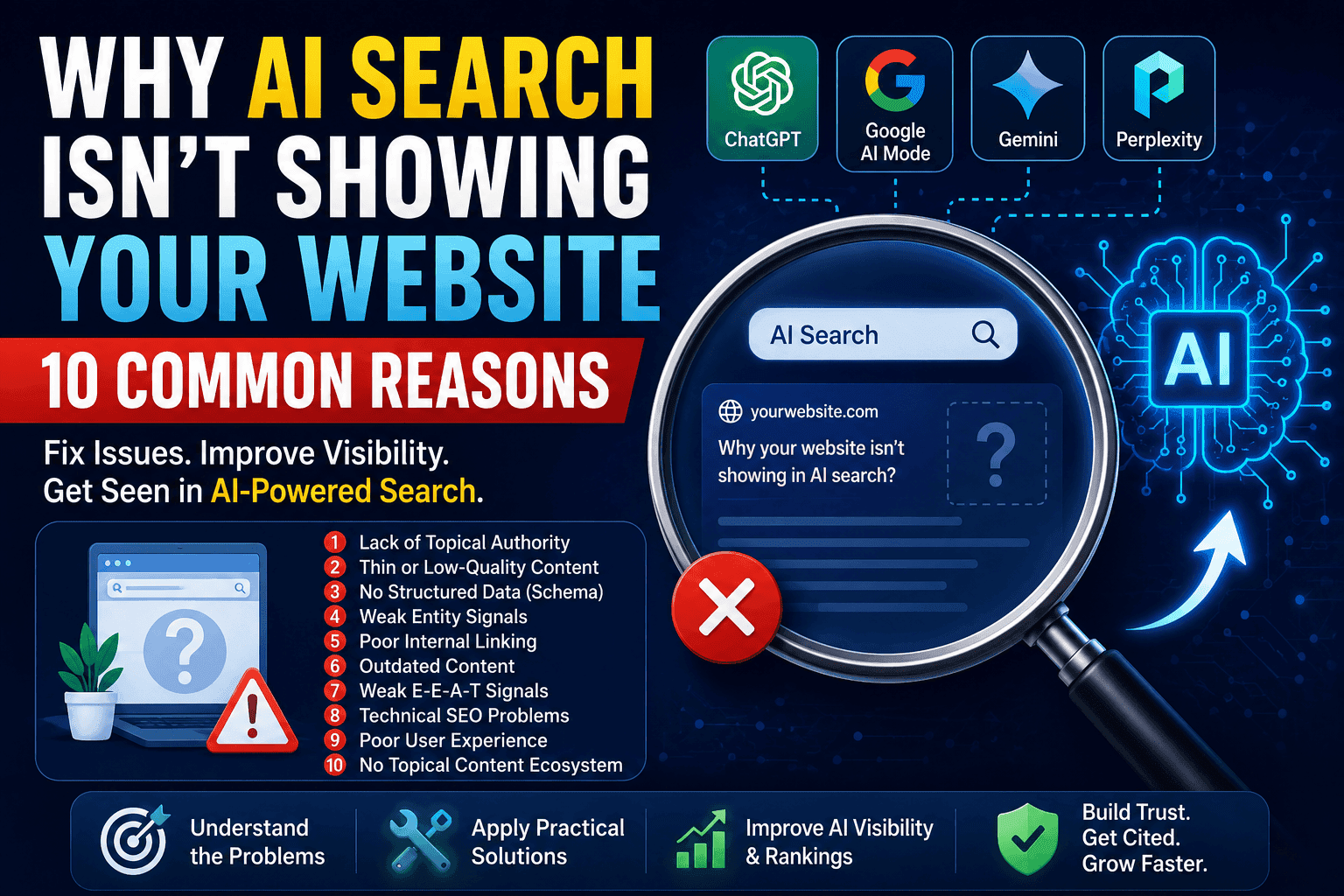
In this guide, we’ll explore the 10 most common reasons why AI-powered platforms aren’t showing your website and explain how you can improve your chances of being referenced by modern AI systems.
If you’re looking for practical strategies to improve your AI visibility, read our complete guide on How to Rank in AI Search Engines, where we explain the techniques that help websites perform better in AI-powered search.
2. What Is AI Search?
AI Search refers to search experiences powered by artificial intelligence that generate direct, conversational answers instead of simply displaying a list of web pages.
Examples include:
- ChatGPT
- Google AI Mode
- AI Overviews
- Google Gemini
- Microsoft Copilot
- Perplexity AI
These platforms analyze information from multiple trusted sources, understand user intent, compare different perspectives, and produce summarized answers.
Unlike traditional search engines that rely heavily on keyword matching, AI-powered search focuses on understanding meaning, context, and authority.
For website owners, this means that ranking on Google alone is no longer enough. Your content must also be easy for AI systems to understand, trust, and reference.
3. How AI Search Chooses Websites
One of the biggest misconceptions is that AI platforms simply copy Google’s search rankings.
They don’t.
AI systems evaluate multiple factors before deciding whether to reference a website.
Some of the most important signals include:
- High-quality, original content
- Strong topical authority
- Clear entity recognition
- Schema markup and structured data
- Trustworthy authors and organizations
- Fresh, up-to-date information
- Strong internal linking
- Technical SEO health
- Positive user experience
Rather than selecting pages with the highest keyword density, AI-powered platforms prefer websites that provide complete, reliable, and well-organized information.
4. Reason #1: Your Website Lacks Topical Authority
One of the biggest reasons answer engines ignore websites is the lack of topical authority.
Topical authority means becoming a trusted source on a specific subject rather than publishing isolated articles on unrelated topics.
Website A
Publishes one article about AI SEO and then switches to travel, fitness, cryptocurrency, and cooking.
Website B
Publishes dozens of detailed articles covering:
- AI Search Optimization
- Google AI Mode
- Schema Markup
- Entity SEO
- Technical Optimization
- Answer Engine Optimization
- Google Search Console
- Content Strategy
Even if both websites publish excellent content, AI systems are much more likely to trust Website B because it consistently demonstrates expertise within a single niche.
How to Fix It
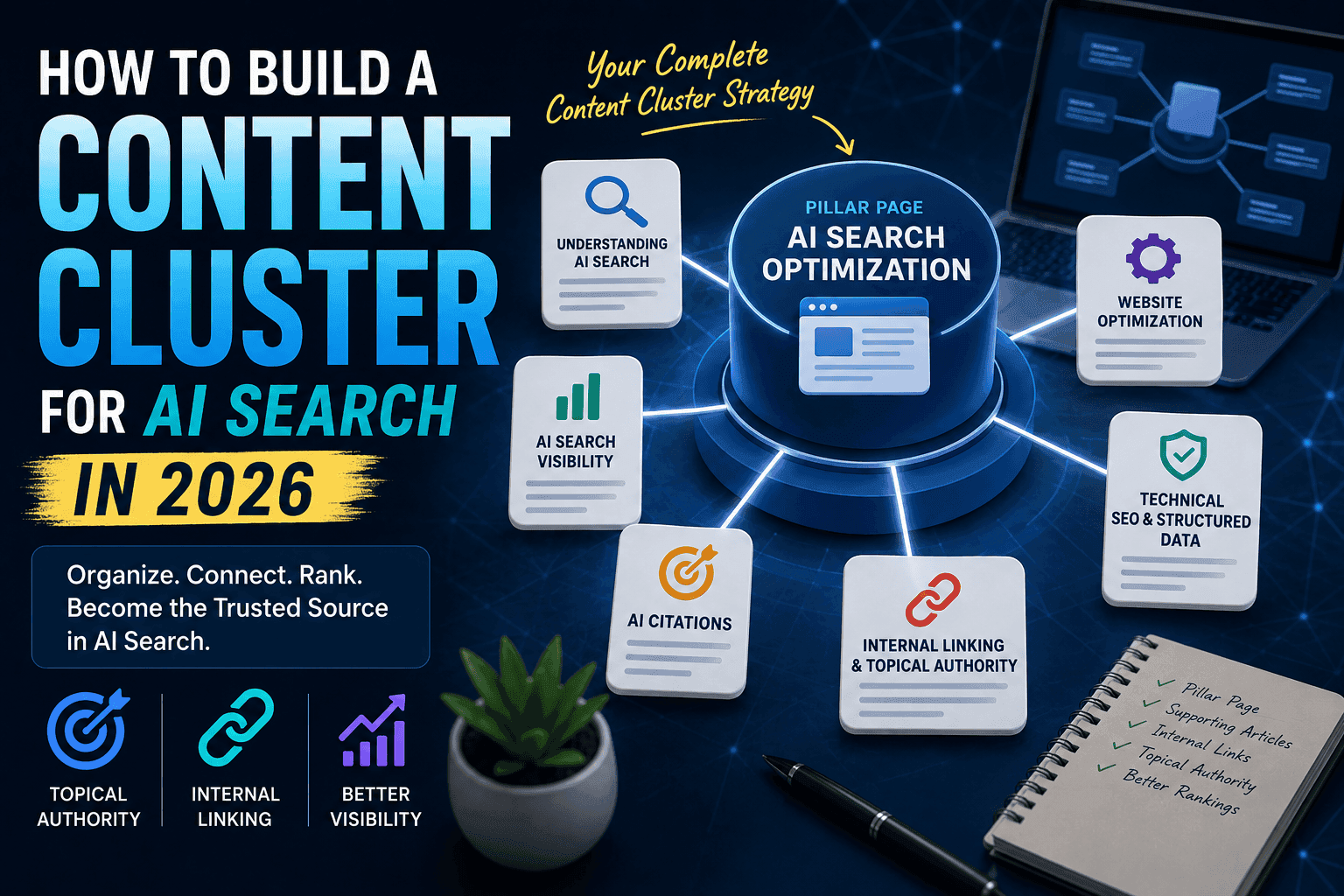
- Build content clusters around one main topic.
- Connect related articles with internal links.
- Publish comprehensive guides instead of isolated blog posts.
- Update existing articles regularly.
- Cover beginner, intermediate, and advanced topics.
5. Reason #2: Thin or Low-Quality Content
Many websites publish content simply to increase the number of blog posts.
Unfortunately, AI systems prioritize quality over quantity.
Modern AI platforms look for content that:
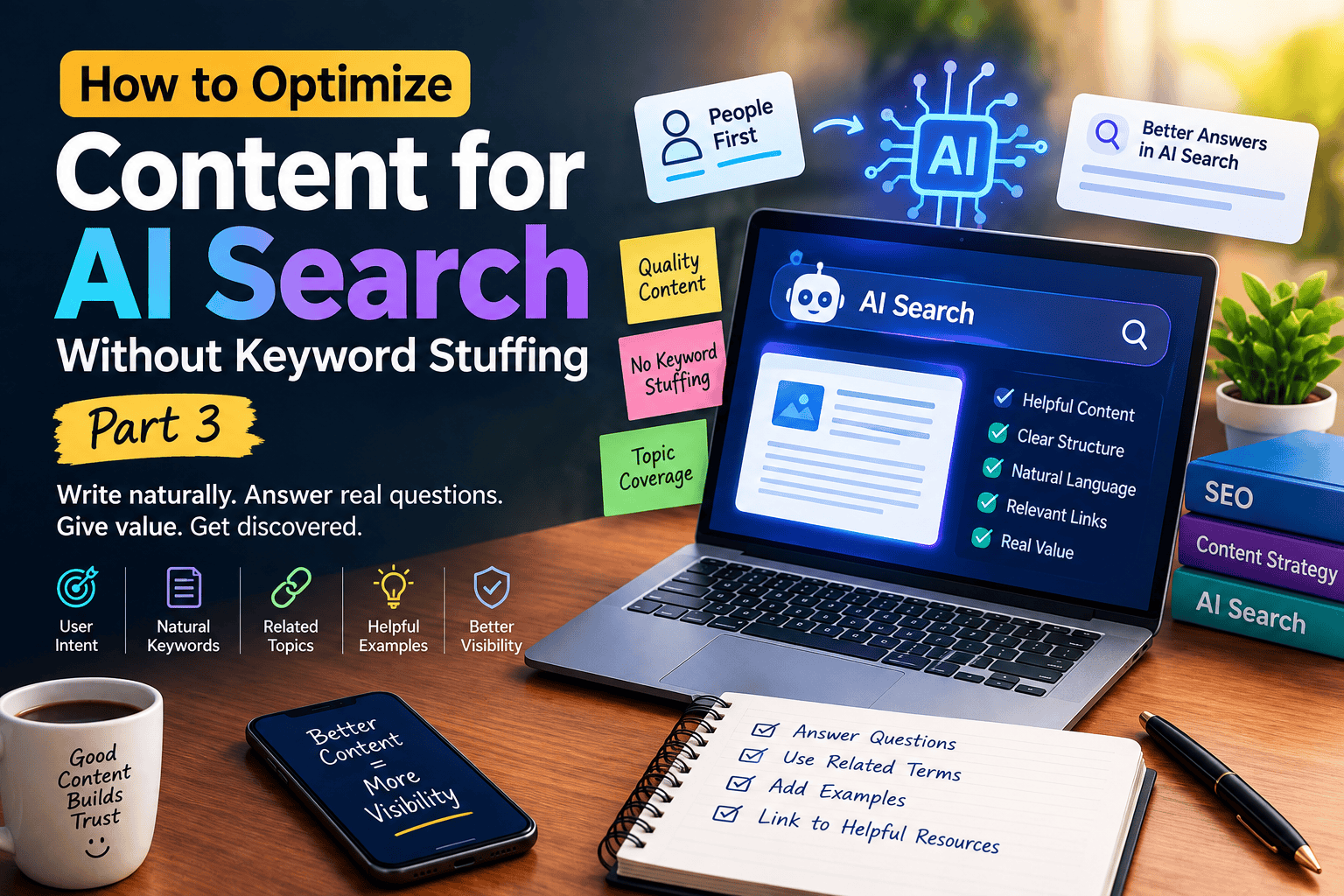
- Answers user questions completely.
- Includes practical advice.
- Demonstrates real expertise.
- Uses clear headings and structure.
- Provides original insights.
- Is factually accurate and regularly updated.
How to Fix It
- Create comprehensive guides instead of brief articles.
- Add original examples and screenshots.
- Include case studies whenever possible.
- Share personal experience or expert insights.
- Refresh older content with new information.
Real-Life Example
Agency A
- 700-word article
- Generic AI-generated content
- No examples, no internal links
- No author information, no schema markup
Agency B
- 2,000-word in-depth guide
- Original research and practical tips
- Real client examples + FAQ section
- Strong internal linking + Article and Organization Schema
- Detailed author profile
Lesson: AI-powered search rewards websites that consistently provide value—not those that simply publish more content.
6. Reason #3: Your Website Doesn’t Use Structured Data
One of the most overlooked reasons websites fail to appear in AI-powered search is the absence of schema markup.
Schema helps search engines understand what your content actually represents. AI systems can recognize whether a page is an article, product, service, FAQ, organization, or local business.
Implementing Article Schema, Organization Schema, FAQ Schema, and Breadcrumb Schema provides additional context that supports AI understanding.
How to Fix It
- Implement the correct Schema Markup for every page.
- Use JSON-LD, Google’s recommended format.
- Validate your schema before publishing.
- Keep schema updated whenever content changes.
- Structured data plays a key role in helping search engines understand your content. Learn more in our detailed guide on How Structured Data Helps AI Understand Your Website.
7. Reason #4: Weak Entity Signals
Modern search engines identify entities such as people, businesses, products, locations, and organizations.
To understand why entity SEO is becoming increasingly important, explore our guide on The Future of SEO: AI, Entities, Answer Engines & Google AI Mode
Strong entity signals include:
- Consistent business information
- Detailed About page
- Author biographies
- Organization Schema
- Social media profiles
- Brand mentions across trusted websites
How to Fix It
- Create a detailed About Us page.
- Add author profiles with credentials.
- Use Organization and Person Schema.
- Maintain consistent business information across the web.
- Build your brand through guest posts and industry mentions.
8. Reason #5: Poor Internal Linking
Internal linking helps search engines understand how different pages relate to each other and strengthens topical authority.
How to Fix It
- Link every new article to older relevant content.
- Use descriptive anchor text instead of “click here.”
- Create topic clusters around your main niche.
- Update older articles whenever you publish new content.
9. Reason #6: Your Content Is Outdated
AI systems aim to provide the most accurate and up-to-date information. If your articles are old, AI may prefer newer resources.
How to Fix It
- Refresh statistics and examples.
- Update screenshots.
- Add recent developments.
- Expand sections with new insights.
10. Reason #7: Weak E-E-A-T Signals
Google emphasizes Experience, Expertise, Authoritativeness, and Trustworthiness (E-E-A-T).
How to Fix It
- Add detailed author biographies.
- Display business information clearly.
- Cite reputable sources.
- Keep your website secure with HTTPS.
- Publish original, experience-based content.
11. Reason #8: Technical SEO Problems
Even the best content can struggle if your website has technical issues. AI platforms rely on search engines to crawl and index your pages.
Technical issues can significantly impact your visibility. Read our article on 10 Common SEO Mistakes That Are Hurting Your Rankings to identify and fix common optimization errors.
Common issues: Slow page speed, broken links, missing sitemap, poor mobile responsiveness, duplicate content, crawl errors.
How to Fix It
- Improve Core Web Vitals.
- Submit an updated XML sitemap.
- Fix crawl errors in Google Search Console.
- Optimize images and website speed.
- Ensure your website is mobile-friendly.
12. Reason #9: Poor User Experience
If visitors quickly leave your website, search engines interpret this as a sign that your content isn’t meeting user expectations.
How to Fix It
- Simplify navigation.
- Improve page readability.
- Use descriptive headings.
- Reduce unnecessary pop-ups.
- Optimize for mobile devices.
13. Reason #10: You Haven’t Built a Content Ecosystem
AI systems prefer websites that demonstrate comprehensive knowledge about a topic through connected articles.
How to Fix It
- Plan content around topic clusters.
- Publish related articles consistently.
- Update existing content.
- Strengthen internal linking.
- Cover beginner, intermediate, and advanced topics.
AI Search Optimization Checklist
- Publish original, helpful content.
- Demonstrate real experience and expertise.
- Build topical authority within your niche.
- Add appropriate Schema Markup.
- Strengthen entity signals.
- Create a logical internal linking structure.
- Keep content updated regularly.
- Improve technical SEO and Core Web Vitals.
- Ensure your website is mobile-friendly.
- Include author information and business details.
- Answer real user questions clearly.
Case Study: From Invisible to AI-Ready
A freelance web design agency wanted to attract more clients through AI-powered search. Over eight months, the website:
- Published detailed topic clusters around WordPress, Technical SEO, AI Search, and Website Speed.
- Added Organization, Person, and Article Schema.
- Improved Core Web Vitals.
- Rewrote outdated articles with practical examples.
- Connected every new article to existing content.
- Added author biographies and earned industry mentions.
Result: Organic traffic increased and several articles became visible in AI-powered search experiences.
Conclusion
AI search is changing how websites are discovered, but the principles of long-term success remain consistent.
Websites that publish original content, build topical authority, strengthen technical SEO, and demonstrate genuine expertise are far more likely to earn visibility in both traditional search engines and AI-powered platforms.
Instead of asking, “Why isn’t AI showing my website?”, ask: “How can I make my website the most trustworthy and useful resource on this topic?”
Final Thoughts
AI search is not replacing SEO—it is expanding it.
The websites that succeed in this new era will be those that combine technical excellence, high-quality content, strong entity signals, schema markup, and a people-first approach.
Focus on solving real problems and continuously improving your website. If you do that consistently, you’ll be well-positioned for both today’s search engines and tomorrow’s AI-powered search experiences.
Frequently Asked Questions :
No. While strong Google rankings help, AI platforms evaluate additional factors such as content quality, semantic relevance, topical authority, structured data, and overall trustworthiness.
Common reasons include weak topical authority, poor content quality, missing structured data, weak entity signals, technical SEO issues, outdated content, and insufficient trust signals.
Create comprehensive content, build topic clusters, implement Schema Markup, improve technical SEO, strengthen internal linking, and regularly update your content.
Structured data is not mandatory, but it helps search engines and AI systems better understand your website, making it an important part of modern SEO.
There is no fixed timeline. Websites that consistently publish high-quality content and build authority over time generally have a better chance of being referenced by AI-powered search platforms.